Reading list
AOD-9604 reports, arranged around the jobs being tested.
Fat metabolism and the human report
For the fragment’s experimental identity, start with the metabolic-domain study. The earlier rat fat-pad paper concerns a related C-terminal sequence, while the receptor-knockout mouse paper examines AOD9604 itself.
The oral human safety report concerns tolerability. For sheer experimental texture, the mouse paper is my first choice, with its split between acute and chronic responses.
Publication years and experimental settings
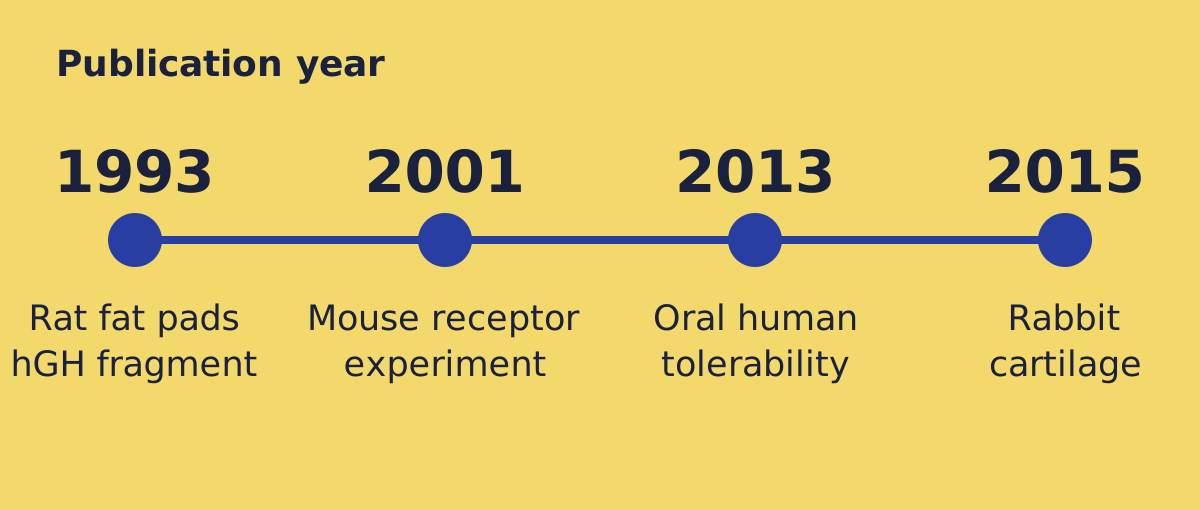
The dates below are publication years: the rat-tissue fragment study, the AOD9604 mouse experiment, the human tolerability report and the rabbit cartilage study. They mark different questions, rather than successive levels of a single completed test.
Cartilage and broader safety
The rabbit knee study is the direct cartilage experiment discussed here. For a broader caution about peptide therapies, there is the sports-medicine safety and efficacy review.
- Metabolic studies of a synthetic lipolytic domain (AOD9604) of human growth hormone ↗
- Antilipogenic action of synthetic C-terminal sequence 177-191 of human growth hormone ↗
- The effects of human GH and its lipolytic fragment (AOD9604) on lipid metabolism following chronic treatment in obese mice and beta(3)-AR knock-out mice ↗
- Safety and Tolerability of the Hexadecapeptide AOD9604 in Humans ↗
- Effect of Intra-articular Injection of AOD9604 with or without Hyaluronic Acid in Rabbit Osteoarthritis Model ↗
- Safety and Efficacy of Approved and Unapproved Peptide Therapies for Musculoskeletal Injuries and Athletic Performance ↗